
Cataract Surgery in Durban: What to Expect, From Diagnosis to Clear Vision
19 June 2026
Diabetes and Your Eyes: Why Every Diabetic in KZN Needs an Annual Eye Exam
23 June 2026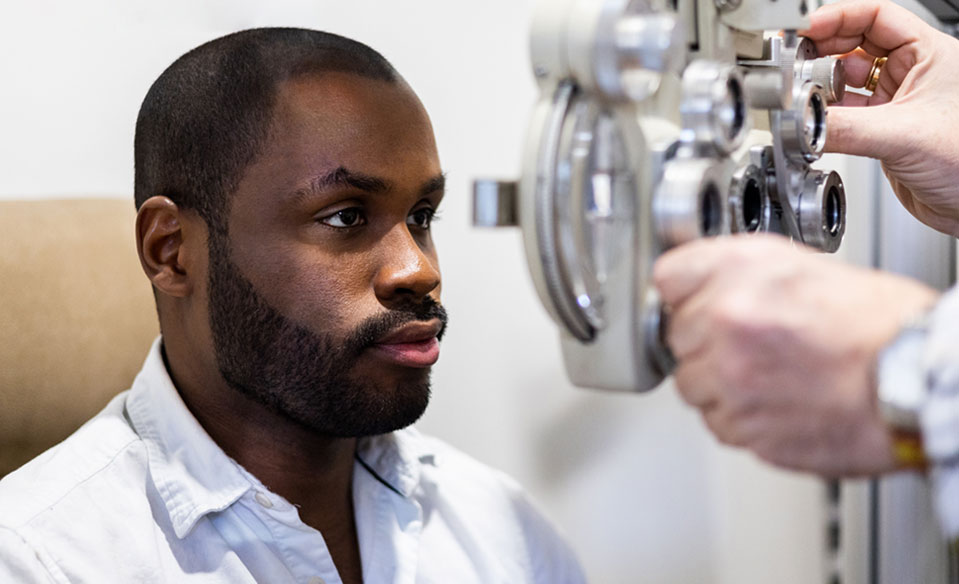

Glaucoma: The Silent Thief of Sight — Why Early Detection in Durban Saves Vision
Glaucoma is called “the silent thief of sight” for a reason. It steals vision so gradually, so painlessly, and so quietly that most people do not realise anything is wrong until significant, irreversible damage has already been done. By some estimates, 50% of people living with glaucoma do not know they have it.
This article explains what glaucoma is, who is most at risk, why it is so dangerous, and what can be done to detect and treat it — before it takes something that cannot be given back.
What Is Glaucoma?
Glaucoma is not a single disease but a group of progressive conditions that damage the optic nerve — the cable that carries visual information from the eye to the brain. In most cases, the damage is caused by elevated pressure inside the eye, known as intraocular pressure (IOP). When the fluid that normally circulates inside the front of the eye cannot drain properly, pressure builds. Over time, this pressure damages the delicate nerve fibres in the optic nerve. Once those fibres are lost, the vision they carried is lost permanently.
Glaucoma is the leading cause of irreversible blindness worldwide, affecting over 80 million people globally.
Why Glaucoma Is So Dangerous
The most common form — primary open-angle glaucoma — produces no pain, no redness, and no noticeable symptoms in its early and moderate stages. It attacks peripheral vision first. Your brain compensates for the gaps, so you do not notice them. By the time you become aware that something is wrong, 40% to 50% of the optic nerve fibres may already be permanently damaged.
This is why glaucoma cannot be detected by symptoms alone. It requires a thorough eye examination by an ophthalmologist.
There is one critical exception. Acute angle-closure glaucoma strikes suddenly and painfully — severe eye pain, headache, nausea, blurred vision, and halos around lights. This is an ophthalmic emergency requiring immediate treatment to prevent permanent vision loss.
Who Is at Risk?
Certain groups face a significantly higher risk of developing glaucoma. Age is a major factor — the risk increases substantially after 40 and roughly doubles with each decade. Family history matters enormously; if a parent or sibling has glaucoma, your risk is four to nine times higher than average. People of African and Afro-Caribbean descent have a higher prevalence of glaucoma and tend to develop it earlier and more aggressively. Diabetes, high myopia (short-sightedness), thin corneas, previous eye injuries, and prolonged corticosteroid use all increase risk further.
In South Africa, these risk factors converge in a large portion of the population — making regular screening especially important.
How Glaucoma Is Detected
A comprehensive glaucoma assessment involves several complementary tests:
- Tonometry measures the pressure inside the eye.
- Gonioscopy allows the ophthalmologist to examine the drainage angle where fluid exits the eye.
- Optic disc assessment, using a slit lamp and specialised lenses, evaluates the physical appearance of the optic nerve for signs of damage.
- Optical coherence tomography (OCT) provides a high-resolution scan of the retinal nerve fibre layer, measuring its thickness with micron-level precision — often detecting damage before it becomes visible on standard examination.
- Visual field testing maps the full extent of your peripheral and central vision, identifying any areas of loss.
Together, these tests give a complete picture. No single test is sufficient on its own.
Treatment: Protecting the Vision You Have
There is no cure for glaucoma. Vision that has been lost cannot be restored. However, with early detection and consistent treatment, further loss can almost always be slowed or stopped.
Treatment typically begins with medicated eye drops that lower intraocular pressure — either by reducing the amount of fluid the eye produces or by improving the rate at which it drains. For many patients, drops are sufficient to control the disease long-term.
When drops alone are not enough, laser treatment such as selective laser trabeculoplasty (SLT) can improve drainage without surgery. For patients who need more, modern surgical options have transformed glaucoma care.
MIGS: A New Era in Glaucoma Surgery
Minimally invasive glaucoma surgery — known as MIGS — represents one of the most significant advances in glaucoma treatment in recent years. MIGS procedures use tiny devices and incisions inside the eye to improve fluid drainage, lower pressure, and often reduce or eliminate the need for daily eye drops.
Procedures such as the iStent — the smallest medical device ever implanted in the human body — and the Hydrus microstent can be performed at the same time as cataract surgery, meaning patients benefit from two procedures through one operation. Compared to traditional glaucoma surgery, MIGS offers faster recovery, fewer complications, and a gentler approach that is particularly well suited to early and moderate glaucoma.
The Case for Regular Screening
If you are over 40, have a family history of glaucoma, have diabetes, or fall into any of the risk categories above, regular screening is the single most important thing you can do to protect your vision. The examination is straightforward, painless, and takes less than an hour. The alternative — waiting for symptoms — means waiting until it is too late to prevent significant vision loss.

Dr Johann Snyman is a specialist ophthalmologist practising in Kloof and Westville, Durban, with specialist expertise in glaucoma diagnosis, medical management, and MIGS surgery. He holds the FCOphth from the Colleges of Medicine of South Africa and an MMed in Ophthalmology from the University of KwaZulu-Natal. He serves as President of the OSSA Young Ophthalmologists Executive Committee and is a consulting ophthalmologist at McCord Provincial Eye Hospital.

Don’t Wait for Symptoms That May Never Come
If you are at risk for glaucoma — or if you have not had a comprehensive eye examination recently — now is the time to act.
Book an appointment · +27 (0)31 854 0003